
Bronfenbrenner’s Ecological Systems Model
Dr Urie Bronfenbrenner’s Ecological Systems Model (1979)
Bronfenbrenner’s model explains how a child’s development is influenced by multiple interconnected systems—from their family and classroom to broader cultural and political contexts. It considers how these systems interact and shape outcomes over time. The theory helps educators, parents, and policymakers understand how various contexts (the ‘systems’ described by Bronfenbrenner) can support or hinder a child's social-emotional wellbeing.
Bronfenbrenner informs the Boingboing approach to resilience and is a foundation for the CASEL approach to SEL
Bronfenbrenner can provide a powerful lens through which to consider belonging and mattering
Why?
Bronfenbrenner reminds us that children’s development is shaped by the relationships and systems around them. Schools are a vital part of this ecology, but children thrive best when families, schools, communities and services work together to create environments of safety, belonging and opportunity.
This is reflected in ‘Every Child Achieving and Thriving’ white paper (DfE, February 2026) with emphasis on schools’ role as educators but also as ‘anchors’ within the community and therefore a powerful setting to help families access support and services through strong collaboration between schools and other partners.
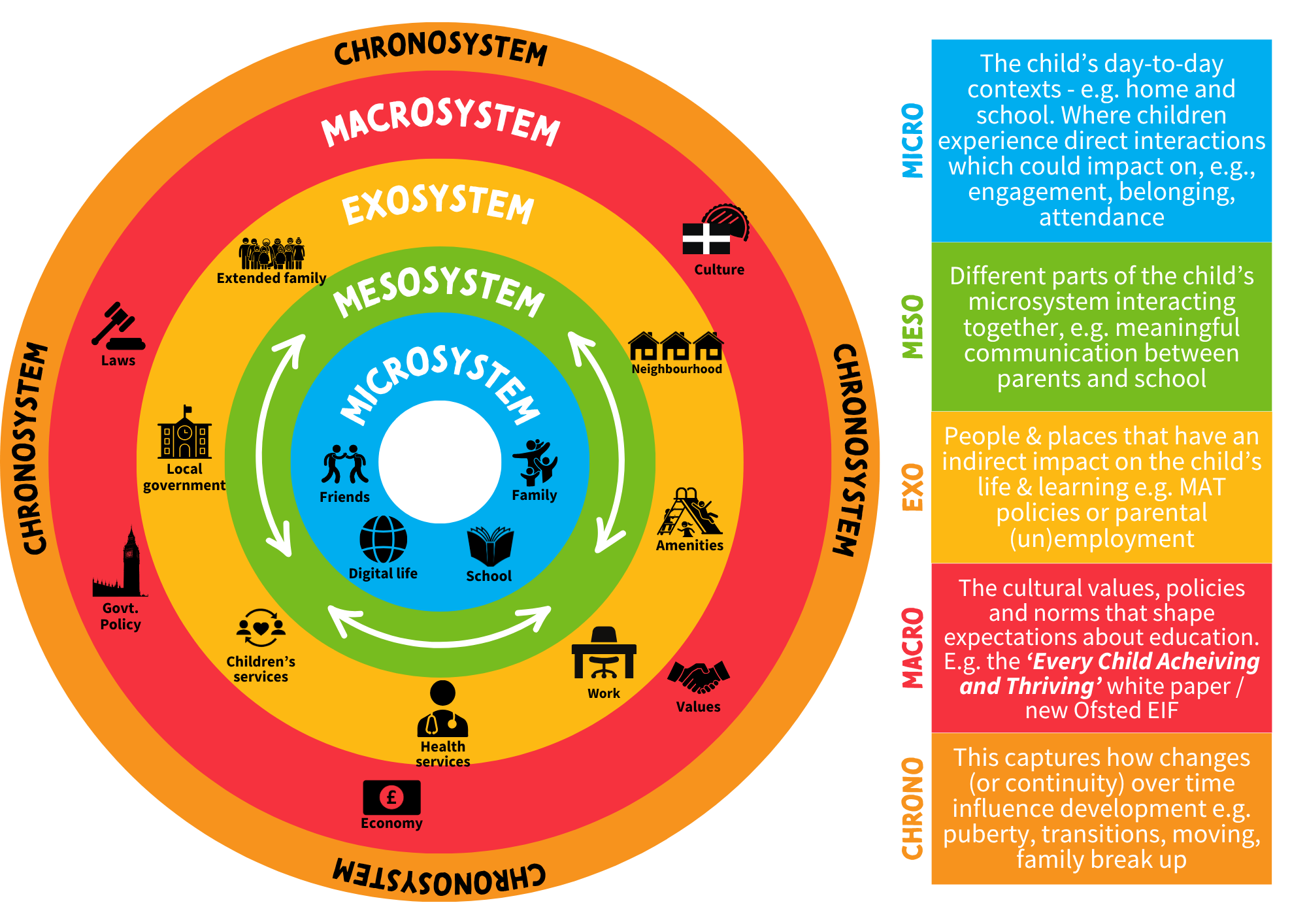
NB The original model did not include the digital, online world as an influencing factor for individuals in the microsystem. The role of social media and online life is huge for most of our children and it is a powerful factor that YP themselves want to be considered.
Bronfenbrenner in practice
The graphic below shows Bronfenbrenner's Socio-ecological Model and the dynamic interrelations among various personal and environmental factors can influence child development applied to local level and for an individual child.
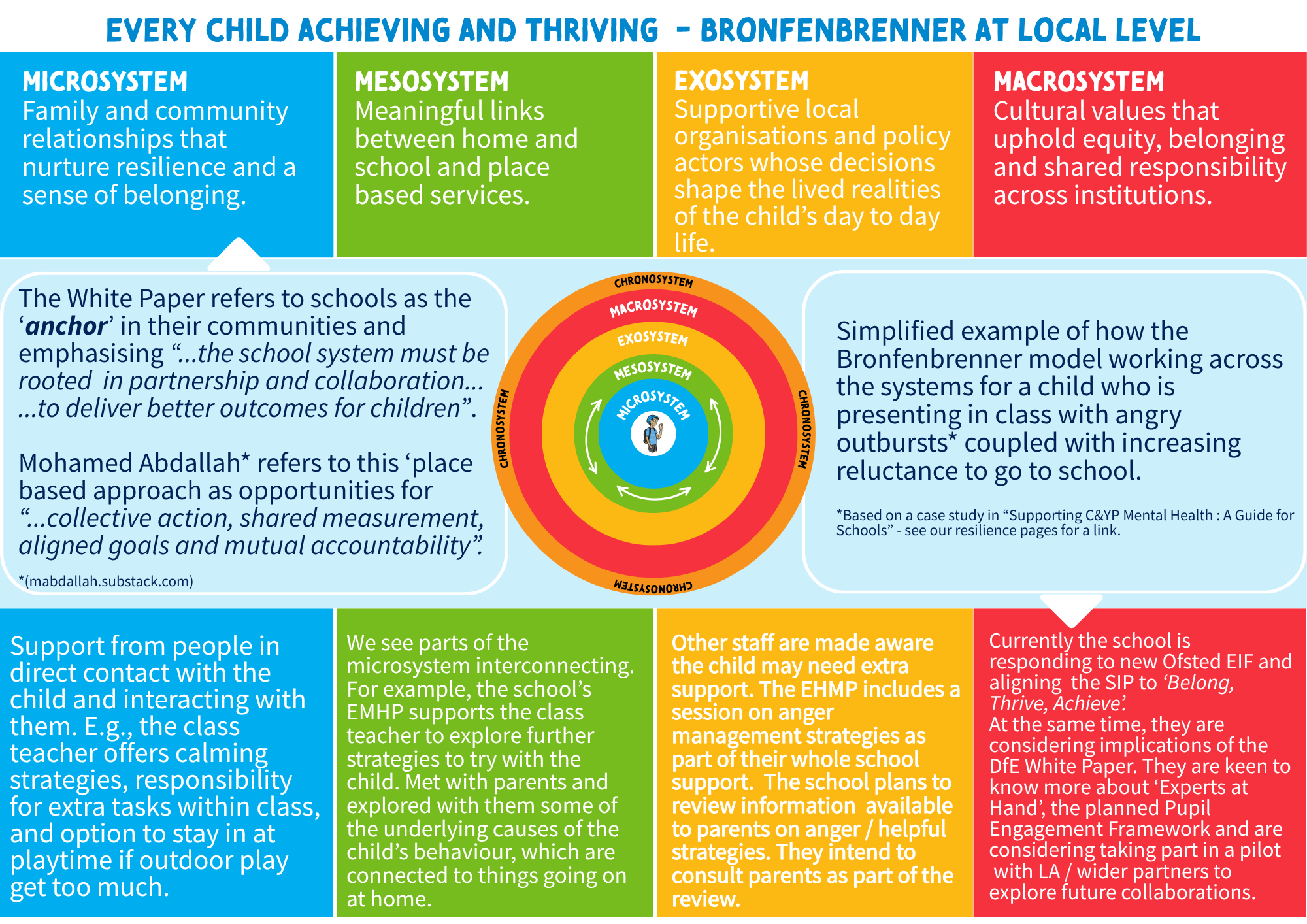
(draft - work in progress)
References / Further Reading
Guy-Evans, O (2020). Bronfenbrenner’s ecological systems theory. Simply Psychology.
Supporting Children and Young People’s Mental Health:(Supporting children and young people's mental health: A guide for schools using a resilience based approach – Angie Hart, Anne Rathbone, Claire Stubbs, Mary Hinton, Lisa Buttery, Becky Heaver, Simon Duncan & Victoria Spencer-Hughes, Boingboing 2021)
Abdallah, M. "When One School Carries What Belongs to a Place. Disengagement Lives in Places, Not Just School" The Drawbridge Collective, Blog Feb 2026