Cornwall Schools’ Wellbeing Hub Newsletter 23rd October 2026
Friday 23rd October 2026
Welcome to the Wellbeing Newsletter
Find out more about Headstart’s Cornwall Schools’ Wellbeing Hub and the support / resources / tools available to support “a Whole School, trauma informed, relational Approach to Wellbeing that is ‘Everybody’s Business’".
Welcome
Everyone Is Talking About Belonging
In the space of a few days, three significant publications on school belonging were released, alongside a fourth report exploring the relationship between belonging and attainment. Together, they offer reassurance that many aspects of HeadStart's Whole School Approach reflect current thinking and emerging evidence.
The publications come from the Department for Education (DfE), Dr Lisa Cherry, and Phil Banks, with a further DfE report focusing on attainment. While each takes a different perspective, they share a common message: belonging is shaped by the conditions schools create and is strengthened through everyday interactions.
What Are They Saying?
The DfE report focuses on schools that have successfully embedded belonging into their culture. Its recommendations include:
- Understand your context.
- Start small.
- Make belonging everyone's responsibility.
- Prioritise staff wellbeing.
- Create genuine agency.
- Sustain the work.
- Measure progress thoughtfully.
This emphasis on context feels particularly relevant in Cornwall, where factors such as rurality, deprivation, transport and community identity can influence children's experiences of belonging.
Dr Lisa Cherry welcomes the DfE report but argues that it does not go far enough. She highlights the importance of mattering - the feeling that you count and that your views are taken seriously. She also draws attention to children whose sense of belonging may be disrupted, including those in care, those attending alternative provision, and pupils returning after exclusion. For these children, belonging cannot be taken for granted.
Phil Banks takes the discussion a step further by asking: now that we know belonging matters, what should we do about it? He argues that belonging should be a core part of education rather than an additional initiative. His article also highlights three important points:
- Staff belonging matters too.
- Listening to pupils is only meaningful when their views influence decisions.
- Belonging and high expectations can, and should, go hand in hand.
Belonging and School Improvement
One of the most encouraging messages from these publications is that belonging is not separate from school improvement. The latest DfE research also strengthens the evidence linking belonging and attainment, helping to demonstrate that belonging supports learning rather than competing with it.
This reflects the principles underpinning HeadStart's Whole School Approach and Brilliant ME!. We have always emphasised the "ordinary magic" of everyday interactions and the role every member of staff can play in helping children feel seen, valued and connected. Meaningful change does not necessarily require complex interventions. Often, it begins with small, consistent actions that strengthen relationships and create a sense of belonging.
Final Thoughts
Across all four publications, the message is clear: belonging is not an additional task for schools. It is part of everyday school life. The challenge is to understand what belonging means within your own context and to make it everybody's business. Encouragingly, many of the opportunities to strengthen belonging already exist within the daily interactions that take place across our schools.
- School Belonging Case Studies — Department for Education (Bohling et al., 2026)
- The DfE school belonging report through a Belonging Mattering Liminality Framework lens — Dr Lisa Cherry OBE (17 October 2026)
- Belonging Matters. Now What? — Phil Banks, The Belonging Collective (19 October 2026)
- School belonging and attainment at key stage 4 — DfE Research Report RR1645, Pallavi Banerjee (August 2026)
Children's Society Good Childhood Report 2026
Each year, The Children’s Society’s Good Childhood Report explores what children and young people tell us about how their lives are going. Now in its 15th year, The Children’s Society’s Good Childhood Report presents trends and patterns in young people's wellbeing and explores the theme of people and places of belonging. It brings together quantitative and qualitative insights from children and young people, including from a group of Young Advisors who conducted research with their peers, and from professionals who work directly with children and young people.
Wellbeing and belonging
Belonging was considered by young people and professionals as integral to young people’s wellbeing, with both qualitative insights and survey data highlighting an association between a lack of belonging and low wellbeing.
A range of challenges such as pressure to fit in, discrimination, exclusion and bullying, and fears about the world around them affected young people’s ability to develop a positive sense of belonging and often led to them feeling pressured to change who they are to fit in and conform to expectations.
Low wellbeing was significantly associated with a lower sense of belonging in the community and in a young person’s local area.
Download the reports / find out more
This week's Headstart highlight
Belonging Matters

A growing body of evidence highlights the importance of belonging in improving attendance, engagement, wellbeing and outcomes for children and young people. HeadStart Kernow has developed a dedicated Belonging Hub, bringing together research, tools, resources and practical guidance to help schools create environments where every child feels safe, valued and connected.
The resource explores why belonging matters, the links between belonging, attendance and mental health, and how schools can strengthen inclusion and connection for all pupils, particularly those who may be more vulnerable to feeling marginalised or disconnected. It also introduces the concept of mattering, helping schools consider how children and young people can feel not only that they belong, but that they are noticed, valued and able to make a meaningful contribution.
With belonging now receiving increased national attention through emerging policy and inspection frameworks, this resource provides a valuable opportunity for schools and settings to reflect on their practice and strengthen whole-school approaches to inclusion and wellbeing.
Wellbeing Book of the Week
Compassionate Leadership for School Belonging by Kathryn Riley

In Compassionate Leadership for School Belonging, international scholar and practitioner Kathryn Riley shines the powerful lens of belonging on schools. Belonging is that sense of being somewhere you can be confident you will fit in and feel safe in your identity: a feeling of being at home in a place. When belonging is a school’s guiding principle more young people at all levels experience a sense of connectedness and friendship, perform better academically, and come to believe in themselves; their teachers feel more professionally fulfilled, their families more accepted.
BTW it is available to download for free under a Creative Commons licence at www.uclpress.co.uk.
We are huge fans of the work of Kathryn Riley and she recently oversaw the DfE case studies report (see above). Riley's work on school belonging is co-produced with schools and young people which brings an urgency and authenticity to the call to action to try and stem the "seemingly relentless rise in the number of young people who feel school is not for them". It's powerful and practical and a great starting point for thinking about place based belonging. Highly recommended.
Other Exciting FREE Headstart Training Opportunities
SPACE - FREE training: Supporting Parents and Children Emotionally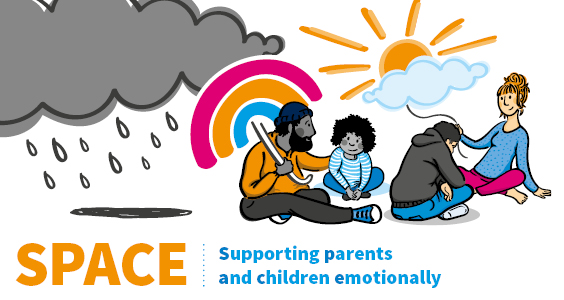
1 December - 3 December 2026 Online
Following the 3-day course with our partners at Rock Pool CIC, facilitators are equipped to deliver a five-week SPACE programme for parents and carers and/or children and young people within their own settings, helping to strengthen relationships, connections and emotional wellbeing across the school community. Please see the attached for more information.
Spaces are limited, therefore if you would like to register your interest, please do so as soon as you can by emailing space@cornwall.gov.uk
Supporting Military-Connected Children in Cornwall Schools

A new programme of whole-school training is being launched to help staff better understand and support children and young people from Armed Forces families. Delivered in partnership with HeadStart Kernow, Cornwall Council and Active Plus, the training is designed to increase awareness of the experience's military-connected children may face, including frequent school moves, parental deployment, family separation and disrupted learning.
Open to all school staff, the sessions will explore the military child experience, recognise emotional, social and academic needs, and share practical strategies for creating a military-friendly school culture. The training promotes a whole-school approach, recognising that every member of staff has a role to play in helping military-connected pupils feel safe, understood and supported.
Who should attend? Teachers, teaching assistants, pastoral and safeguarding staff, SENCOs, senior leaders, reception and office staff, catering teams, site staff, supervisors and anyone working with children and young people in school settings.
The training will be delivered over 2 hours, in person or x2 1 hour sessions.
To book or find out more please email: tracy.bowers@cornwall.gov.uk
CAPA First Response and HeadStart Kernow: Understanding Child-to-Parent/Carer Aggression and Harm

Wednesday 25 November, 3.30pm to 5.00pm | Online
This free online session from CAPA First Response and HeadStart Kernow explores Child-to-Parent Aggression (CPA) through a trauma-informed lens. Designed for professionals working with children, young people and families, the session will help participants understand the impact of CPA, explore what may be driving these behaviours, and develop practical strategies to support children, young people, parents and carers.
Participants will gain greater confidence in recognising and responding to CPA, while considering how behaviours may present differently at home, in school and within the wider community.
Please see the attached flyer for further information and booking details.
Neglect Resources and Support for Professionals

Neglect remains one of the most common forms of child abuse and can have a significant impact on a child's health, wellbeing, development and future outcomes. The Cornwall and the Isles of Scilly Safeguarding Children Partnership provides a range of resources, guidance, tools and training to help professionals identify, assess and respond effectively to neglect.
The resources support a multi-agency approach to safeguarding and include information on recognising the signs of neglect, understanding cumulative harm, assessment tools and practical guidance for working with children, young people and families. There are also specialist training opportunities available for professionals across education, health, social care and the voluntary sector.
Free CPD Webinar: Using Outdoor Spaces to Support Student Mental Health
1 November 2026, 4.15pm to 5.00pm

Join BrainWaves for a free webinar exploring how schools can use outdoor and green spaces to support children's mental health and wellbeing. The session will examine the evidence behind nature-based approaches and share practical examples of how schools are using outdoor environments to improve wellbeing, engagement and emotional resilience.
With concerns around anxiety, depression and emotionally based school avoidance continuing to grow, this webinar offers an opportunity to explore simple, sustainable approaches that can help support pupils to thrive.
Dr Pooky Knightsmith

New Book: 10 Steps to a Neurodivergent-Friendly Classroom
Dr Pooky Knightsmith's new book, 10 Steps to a Neurodivergent-Friendly Classroom, offers practical, evidence-informed strategies to help teachers create calmer, clearer and more inclusive learning environments. Focusing on simple changes that can be implemented without additional funding, diagnosis or whole-school change, the book aims to support neurodivergent learners while benefiting all pupils.
Mentally Healthy Schools - Free Slides and Notes
Looking to strengthen wellbeing across your school community? Pooky's free Mentally Healthy Schools slides and notes explore practical ways to develop a whole-school approach to wellbeing. Covering areas such as staff wellbeing, help-seeking, school culture and action planning, the resource is packed with ideas that can be adapted for staff meetings, INSET sessions and school improvement work.
Free Resource: An Anxiety Toolkit
This practical toolkit provides ideas and strategies to help children and young people manage anxiety, develop coping skills and build confidence. Suitable for use by professionals and families, the resource offers realistic, compassionate approaches that can be applied in everyday situations.
Free Webinar: 10 Steps to a Neurodivergent-Friendly Classroom
To coincide with the launch of her new book, Dr Pooky Knightsmith is hosting a webinar exploring ten practical steps that can help create classrooms where neurodivergent learners feel understood, supported and able to thrive.
The session will explore how to increase predictability, reduce cognitive load, improve communication and draw on pupils' strengths, offering practical strategies that can be implemented straight away.
Child Financial Exploitation: Free Resource Pack for Schools and Professionals

When we think about child exploitation, our attention is often drawn to issues such as county lines or online abuse. However, Child Financial Exploitation (CFE) is an increasingly important safeguarding concern that can often go unnoticed.
CFE occurs when children and young people are manipulated into allowing criminals to use their bank accounts to move money, sometimes known as "money muling". Young people may be targeted because their accounts can appear less suspicious than those of adults, making them attractive to those involved in criminal activity.
Fearless, part of Crimestoppers, has developed a free resource pack to help professionals understand the risks associated with child financial exploitation and support conversations with young people about keeping themselves safe.
Stay in touch: Sign up to Headstart’s Cornwall Schools Wellbeing Hub, check out our training and other support and sign up for the occasional newsletter.
And follow us on our page on the Services for Schools platform.