Cornwall Schools’ Wellbeing Hub Newsletter 6th November 2026
Friday 6th November 2026
Welcome to the Wellbeing Newsletter
Find out more about Headstart’s Cornwall Schools’ Wellbeing Hub and the support / resources / tools available to support “a Whole School, trauma informed, relational Approach to Wellbeing that is ‘Everybody’s Business’".
Welcome
We hope you had a restful and restorative half term break. Clocks back, the weather is changing and the first Christmas ads are appearing already… and soon all things Christmas will begin to take over as nativity plays are rehearsed and carol concerts planned. Good Luck!
Perhaps that’s why Action for Happiness have turned to New Ways November for their wellbeing calendar.
New Ways November

Action for Happiness is encouraging people to try something different this month through its New Ways November calendar. The campaign highlights how small changes to our routines can boost wellbeing, bring fresh perspectives and create new opportunities for connection and happiness.
The calendar is packed with simple daily suggestions to help people step outside their comfort zone, try new experiences and approach challenges in different ways. Alongside this, Action for Happiness has also shared resources on being kinder to yourself, recognising the importance of self-compassion in supporting positive mental wellbeing.
Find out more about New Ways November at Action for Happiness
Wellbeing Book of the Week
10 Steps to a Neurodivergent-Friendly Classroom by Pooky Knightsmith

From the back cover: Awarded 'Highly Commended' in the SEND category of the Teach Awards 2026.
Supporting neurodivergent students in schools has never been more urgent, nor more challenging. Amid rising need, limited resources, and shifting policy expectations, educators are under increasing pressure to create inclusive classrooms that are both effective and sustainable.
Pooky Knightsmith distils the core principles of a neurodivergent friendly classroom into ten clear, actionable steps. Aligned with current education policy, including the Partnerships for Inclusion of Neurodiversity in Schools (PINS) programme and the move towards needs-led support, this guide equips staff at every level to strengthen understanding, embed inclusive routines, and create learning environments where all pupils can thrive.
Our thoughts
This practical and accessible guide breaks inclusive practice down into ten achievable steps, covering areas such as predictable routines, sensory and emotional safety, executive functioning, communication, regulation, strengths-based approaches, and collaboration with families.
The 10 steps are practical and realistic. The book is well structured, highly interactive, and includes reflection questions, planning activities, useful case studies, and additional resources that can be implemented immediately.
It is written in a clear, engaging style and would be helpful for team discussions and whole-school development.
This book offers straightforward strategies that can make a meaningful difference for neurodivergent pupils and, ultimately, benefit all learners.
‘Ten simple steps, countless positive impacts’. Highly recommended.
For more book suggestions on a range of topics, please visit our Headstart wellbeing book club.
This week's Headstart highlight
An introduction to Brilliant ME! in Action: Supporting schools, starting where they are

Schools are facing increasingly complex challenges around attendance, inclusion, behaviour, SEND and emotional wellbeing. But these are not necessarily separate problems requiring separate solutions. Often, the same children are at the heart of several of these challenges.
Brilliant ME! in Action, developed by Headstart Kernow, offers a flexible, practical approach to supporting children's social and emotional development, wellbeing and resilience. Rather than introducing another programme for schools to implement, it brings together evidence-informed approaches, ideas and resources that schools can draw upon to meet your own needs and priorities.
At its heart are three simple but powerful questions:
Do I feel safe here? Do I feel I belong here? Do I feel that I matter here?
These questions underpin a whole-school approach built around three principles:
- School specific: Every school is different. Start where you are and build on what already works.
- Everybody's business: Every adult has a part to play in children's wellbeing, belonging and success.
- Ordinary Magic: The everyday relationships, conversations and interactions that can make an extraordinary difference to children's lives.
The Brilliant ME! in Action resources include practical tools for exploring pupil voice and belonging, developing emotional literacy and self-regulation, understanding the brain, and recognising children's strengths. Classroom activities, one-page guides and professional learning resources to help turn these ideas into everyday practice.
The aim is not to add to schools' workload, but to help you connect existing priorities, build on good practice and identify meaningful next steps.
Because helping children feel safe, connected, valued and able to thrive isn't just about what we teach. It's also about what children experience every day, throughout their school community.
Explore Brilliant ME! in Action
Webinar: An introduction to Brilliant ME! in Action. Check our training calendar for upcoming dates
News round up
Eight Signs a Child in Your Class May Be Living with a Parent's Mental Illness - Our Time Charity

Children affected by a parent's mental illness may experience challenges that are not always immediately visible in the classroom. This article highlights eight potential signs to be aware of and offers practical insights to help school staff better understand and support pupils who may be carrying additional responsibilities or emotional burdens at home.
Read more: Eight Signs a Child in Your Class May Be Living with a Parent's Mental Illness
Child Wellbeing: Key Findings from The Good Childhood Report 2026
The Children's Society's latest Good Childhood Report highlights continuing concerns about children's wellbeing across the UK. Findings show that young people's life satisfaction and happiness remain significantly lower than in 2009/10, with 10% of children and young people reporting low wellbeing. Girls reported lower levels of happiness than boys, while school life and appearance were the areas young people were most likely to feel unhappy about.
The report also identifies a strong link between a sense of belonging and positive wellbeing, and calls for greater investment in trusted adults, community hubs and national wellbeing measurement.
Read the report: The Good Childhood Report 2026 (The Children's Society).
Positive Noticing Day 2026
Paul Dix and the When the Adults Change team are inviting schools to take part in Positive Noticing Day 2026. To support schools, they will be hosting a free 15-minute online briefing on Friday 13 November at 12:45pm, sharing how positive noticing can help strengthen relationships, build belonging and promote positive school culture.
Whether you're already involved or would like to find out more, this is a great opportunity to hear practical ideas from one of the UK's leading voices on behaviour and relationships in schools.
Join the Positive Noticing Day briefing (Zoom)
Free World Kindness Day (13th November) Resources from the School of Kindness
With World Kindness Day and Anti-Bullying Week approaching, schools can access a range of free PSHE resources designed to help pupils understand the positive impact of kindness and recognise their ability to make a difference to others.
Resources include a 30-minute live World Kindness Day assembly (taking place on 13 November), a five-day activity pack for use in the lead-up to the event, and a Kindness Challenge for classes to complete together. Last year, more than 100,000 children took part in the live assembly.
These free resources provide a simple way to promote kindness, inclusion and positive relationships across your school community.
Get the free World Kindness Day resources from the School of Kindness
KCSIE 2026: Mental Health and Safeguarding
The latest Keeping Children Safe in Education (KCSIE) 2026 guidance reinforces the important link between mental health and safeguarding. While mental health was only formally included in the definition of safeguarding in 2020, schools are now expected to recognise that mental health difficulties can both indicate and develop into safeguarding concerns.
KCSIE highlights several signs that may warrant concern, including significant changes in behaviour, persistent sleep difficulties, social withdrawal, loss of interest in usual activities, and signs of self-harm or self-neglect. Staff are reminded that these indicators are not a diagnosis, but signals to notice, report and monitor. The guidance emphasises the role of all school staff in identifying concerns early and working with Designated Safeguarding Leads, Mental Health Leads, families and specialist services to ensure appropriate support.
Read more: Keeping Children Safe in Education 2026 (Department for Education).
Free resources from The Anna Freud Centre
Healthy Relationships Toolkit for Primary-Aged Pupils
The Anna Freud Centre's Healthy Relationships Toolkit provides primary schools with practical, age-appropriate resources to help children develop positive relationships, understand boundaries, build empathy and strengthen communication skills. The toolkit supports schools in delivering relationships education that promotes emotional wellbeing and respectful interactions.
Access the Healthy Relationships Toolkit for primary-aged pupils
Healthy Relationships Toolkit for Secondary Schools
This free Anna Freud Centre toolkit supports secondary schools in exploring healthy relationships, consent, respect, communication and emotional wellbeing. Packed with practical activities and discussion materials, it helps young people develop the skills and confidence needed to navigate relationships safely and positively, both online and offline.
Access the Healthy Relationships Toolkit for secondary schools
These free resources may be useful for PSHE, RSHE and safeguarding leads looking to strengthen relationship education and promote positive wellbeing across their school community.
Creative Education
Training Opportunity for Schools with Creative Education
Although HeadStart Kernow's funded access to Creative Education has now ended, Creative Education is offering a discounted continuation package for schools that have been involved with the programme. Schools signing up before 10 December can receive 25% off their first year, alongside discounted whole-school membership rates and complimentary parent/carer access.
Membership includes access to over 500 on-demand CPD courses covering safeguarding, SEMH, SEND, leadership, AI and more, with certificates of completion and regular new content. Schools also receive onboarding support, helpdesk access and a dedicated relationship manager.
Find out more about the Creative Education continuation package
Creative Education Platform Update
Creative Education has launched a brand-new website and learning platform, making it easier than ever for staff to access professional development. Existing users can now sign in using their Microsoft or Google account, with all previous courses, progress and certificates carried across automatically.
New features include improved video playback, dark mode, easier certificate sharing, mobile app-style access, and a dedicated area for parents and carers. The new platform will also support the regular release of new courses and resources.
Explore the new Creative Education platform
Other Exciting FREE Headstart Training Opportunities
SPACE - FREE training: Supporting Parents and Children Emotionally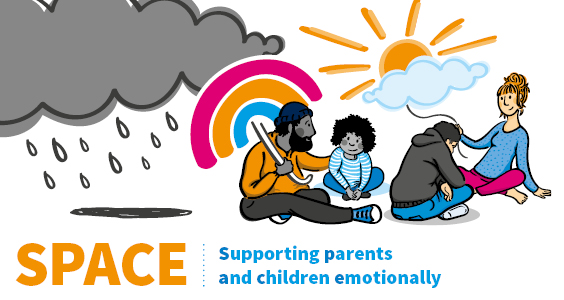
1 December - 3 December 2026 Online
Following the 3-day course with our partners at Rock Pool CIC, facilitators are equipped to deliver a five-week SPACE programme for parents and carers and/or children and young people within their own settings, helping to strengthen relationships, connections and emotional wellbeing across the school community. Please see the attached for more information.
Spaces are limited, therefore if you would like to register your interest, please do so as soon as you can by emailing space@cornwall.gov.uk
CAPA First Response and HeadStart Kernow: Understanding Child-to-Parent/Carer Aggression and Harm

Wednesday 25 November, 3.30pm to 5.00pm | Online
This free online session from CAPA First Response and HeadStart Kernow explores Child-to-Parent Aggression (CPA) through a trauma-informed lens. Designed for professionals working with children, young people and families, the session will help participants understand the impact of CPA, explore what may be driving these behaviours, and develop practical strategies to support children, young people, parents and carers.
Participants will gain greater confidence in recognising and responding to CPA, while considering how behaviours may present differently at home, in school and within the wider community.
For further information and to book your place, please visit our Headstart Training Calendar.
Dr Pooky Knightsmith

On-Demand CPD: Behaviour as Communication (cost involved)
In this practical on-demand training session, Pooky Knightsmith explores how behaviour can be understood as a form of communication rather than something that simply needs to be managed. Behaviour as Communication: Understanding and Responding to Unmet Needs helps adults identify the unmet needs that may sit beneath challenging behaviour and provides practical strategies for responding effectively.
The session covers the four survival responses, six common unmet needs associated with difficult behaviour, and the CALM framework for de-escalating situations in the first few critical moments. Accompanied by notes, slides and a CPD certificate, the training is suitable for school staff, parents and carers, and may be particularly useful for supporting consistent approaches across home and school.
The 49-minute session costs £20 + VAT for individual access.
Free Webinar: From Blame to Unmet Needs
Tuesday 17 November, 4.00-5.00pm (GMT), free to attend
Pooky Knightsmith and Ian Hunkin are offering a free webinar exploring how shifting from blame to understanding unmet needs can lead to more effective and compassionate responses when things go wrong. Their fault? My fault? It's surely someone's fault? will examine how focusing on unmet needs, rather than assigning blame, can support both children and adults.
The session is aimed at teachers, teaching assistants, SENCOs, pastoral staff, parents and carers of neurodivergent children and young people. It includes 30 minutes of practical strategies followed by 30 minutes of discussion and questions. The webinar takes place Tuesday 17 November, 4.00-5.00pm (GMT), is free to attend, and all registered participants will receive a recording.
This promises to be a thought-provoking session for anyone interested in developing more supportive, needs-led approaches to behaviour and wellbeing.
Free Webinar: Reading for Empathy and Wellbeing
10 November at 4.00pm
EmpathyLab is partnering with Oxford University Press for a free online webinar exploring how reading can help children develop empathy, strengthen wellbeing and better understand different perspectives. The session will feature Imogen Bond (EmpathyLab) and education researcher and writer James Clements, drawing on findings from the More than Words research project, which gathered the views of 3,000 young people aged 7-14 about reading.
Taking place on 10 November at 4.00pm, the webinar will combine research evidence with practical, classroom-ready strategies to help educators use reading to support both literacy and emotional development.
This free event may be of particular interest to teachers, literacy leads, librarians and anyone interested in promoting empathy, wellbeing and positive relationships through reading.
Find out more and book your place on the Reading for Empathy webinar
Stay in touch: Sign up to Headstart’s Cornwall Schools Wellbeing Hub, check out our training and other support and sign up for the occasional newsletter.
And follow us on our page on the Services for Schools platform.