Cornwall Schools’ Wellbeing Hub Newsletter 19th March 2026
Thursday 19th March 2026
Welcome to the Wellbeing Newsletter
It’s Brain Awareness Week this week!
Learning about the brain and nervous system is possibly one of the most important ways we can support children and young people’s emotional wellbeing and mental health.
Understanding that you are not “mad, sad or bad” but someone whose brain is responding to what has happened to you and may be stuck in alarm mode is empowering for a young person who’s struggling. Similarly, a five year old explaining that it’s okay to make mistakes because she’s “growing the neurons in my brain” is a sure sign that she’s embracing learning and feels safe to do so.
Neuroscience and understanding the brain is a core part of the new companion to the Brilliant ME! journal. Brilliant Me! in Action is a guide to Social and Emotional Learning in KS2.
The recently updated and refreshed Start Now YP website has a section focusing on the brain, including a short interactive module called Meet Your Amazing Brain.
This Brain Awareness Week, why not explore the website and maybe even have a go at some practical neuroscience and experiment with sphenopalatine ganglioneuralgia!
Books of the Week
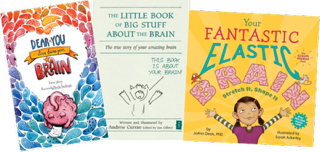
In honour of Brain Awareness Week, we have three books to recommend:
Dear You, Love from Your Brain Karen Young - A warm, reassuring explanation of how the brain works during stress and worry, written to help children feel understood and supported.
Karen Young is a great communicator, and this book is no exception. It beautifully explains complex brain functions and offers practical tools for big feelings, all delivered with warmth and reassurance. A valuable resource for parents and educators alike.
Your Fantastic Elastic Brain JoAnn Deak - An engaging introduction to brain plasticity, showing children how learning, practice and perseverance help the brain grow and change.
The strength of this book is that it provides an accurate introduction to the parts of the brain in a simple but fun way. It is tremendously well done. The growth mindset message, particularly that mistakes are essential for learning, is excellent as well. Highly recommended.
And here’s one for older students or adults…
The Little Book of Big Stuff About the Brain The True Story of Your Amazing Brain Andrew Curran -
What it is, how it works, what it looks like, where it came from, it’s all here in this light hearted and easy to read little book that will guarantee you’ll never think about your own thinking in quite the same way again.
Whatever role you have in life, every action you undertake, every thought you entertain, every memory you hold, every hang up you possess, every quirk, foible, idiosyncrasy and knack, it’s all the result of chemistry and electricity working across a network of squidgy organic matter that you have helped shape throughout your life.
So, enjoy this little book about your amazing brain, but remember, as someone once said,
“If our brains were simple enough for us to understand them, we would be too simple to understand them.”
A superb introduction to the brain and brain science, accessible, informative and fascinating. One of our favourite books. Highly recommended.
This week's Headstart highlight!
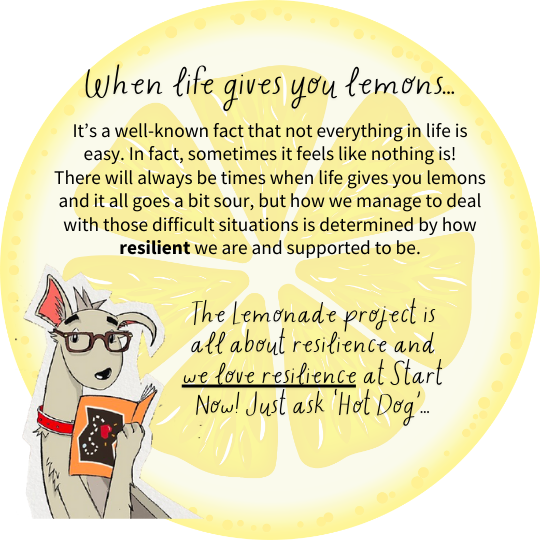
The Lemonade Project – Building Resilience in Young People
The Lemonade Project supports young people experiencing lower levels of emotional wellbeing, using the Boingboing Resilience Framework to help them build confidence, coping skills and resilience in a practical, accessible way. The programme includes the Tough Times Toolkit and Lemonade Resource Book (interactive activities for ages 8+), along with the Life and Lemons Journal for ages 11+, designed to encourage reflection and supportive conversations with a trusted adult.
There is also a short on‑demand training module introducing the Lemonade approach, and sample resource packs can be requested.
Time2Move Easter Holiday Programme! Bookings now LIVE for Easter!
Easter activities are now live for bookings! Time2Move are proud to be offering a wide range of activities across the county for young people in Cornwall. To find out more, head to their website linked below.
Time2Move Easter Holiday Programme! Bookings now LIVE for Easter! – Book here
This Easter, they are doing things a little differently to make the experience even better for everyone. More activities will be added over the coming weeks rather than having all activities online on the first day. Hopefully, this will ensure that there is enough for everyone to choose from, so keep an eye on socials for updates!
The programme is open to all children, with fully funded places available for those receiving benefits‑related free school meals.
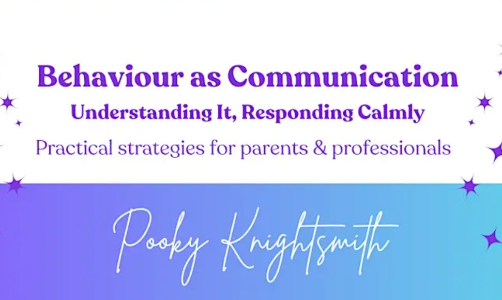
Behaviour as Communication: Understanding It, Responding Calmly – Webinar with Dr Pooky Knightsmith
This live online webinar explores how children use behaviour to communicate stress, unmet needs or emotional overwhelm, and how adults can respond in ways that de‑escalate rather than intensify the situation. Dr Pooky Knightsmith shares practical, easy‑to‑use strategies to help you stay regulated yourself, understand what’s driving the behaviour, and use the CALM framework to support children safely and effectively in the moment.
The session also covers the four survival responses, common unmet needs beneath challenging behaviour, and what meaningful repair looks like after a difficult episode. Suitable for parents, carers, teachers, TAs, SENCOs and anyone supporting a child who is struggling.
Two online sessions are available on Tuesday 22nd April 2026 (4pm or 7pm), with 45 minutes of taught content followed by a live Q&A. All attendees receive a recording of the taught section.
Trauma‑Informed Consultancy Services – Free Introductory Webinars
A series of free introductory webinars is now available, designed to widen understanding of trauma‑informed principles. Each session offers practical insight into how trauma and adversity affect learning, behaviour and relationships, with strategies to help create safer, more responsive environments for children and young people.
Sessions explore:
- Why relational safety and belonging matter more than behavioural compliance, especially for care‑experienced children.
- How Virtual School Heads and advisory teams can encourage trauma‑informed practice in schools, even when systems feel rigid.
- How trauma impacts the brain, body and learning, and what helps students feel understood and able to thrive.
Book onto the series of free introductory webinars here

Words Matter: How to Communicate with Children So They Thrive
A free, evidence‑based e‑learning course designed for parents, carers, teachers and anyone supporting children. Hosted on FutureLearn, the three‑week, self‑paced programme shares practical strategies to strengthen children’s confidence, resilience and wellbeing. It includes expert guidance, research‑informed tips, and weekly reflections from 13‑year‑old Ethan.
More than 2,700 learners across 115 countries have already taken part, with outstanding feedback and a “World Class” Net Promoter Score.
Join the Words Matter: How to Communicate with Children So They Thrive e-learning

Harmful Sexual Behaviour and Misogyny – Youth Justice Board Findings
The Youth Justice Board has released a new Evidence and Insights Pack exploring harmful sexual behaviour (HSB), misogyny and violence involving children. The data highlights rising reports of sexual offences, widespread sexist harassment experienced by girls, and high levels of harmful online content. The pack emphasises that HSB exists on a continuum and that many children showing these behaviours have experienced trauma themselves.
The report also outlines proposed KCSIE 2026 updates, including clearer guidance on harmful sexual behaviour, AI‑generated imagery, misogyny and safeguarding expectations for schools.
Download the Harmful Sexual Behaviour and Misogyny report here
Digital Resilience Spotlight Series
It’s only March, and already there have been a significant number of stories in the news about the risks and harms of the digital world. This can be confusing and overwhelming, especially if you’re also consistently being encouraged to integrate new technology into your teaching and practice. Balancing these issues is tricky, but the Headstart Digital Resilience project is here to help. Our mantra is Don’t Panic. Sometimes, issues in the digital world can seem totally new and unlike anything we’ve ever dealt with before, but on reflection, we find that the risks and issues young people are facing online are not that different to the risks and issues they face offline. As a professional, you are an expert in understanding risk, our resources aim to help you apply your expertise to risks in the digital world. Over the coming months we'll be spotlighting some of the resources we've made to help you navigate these issues, all of which are available for free on the Headstart website, and which can help you assess and respond to the problems you’re facing.
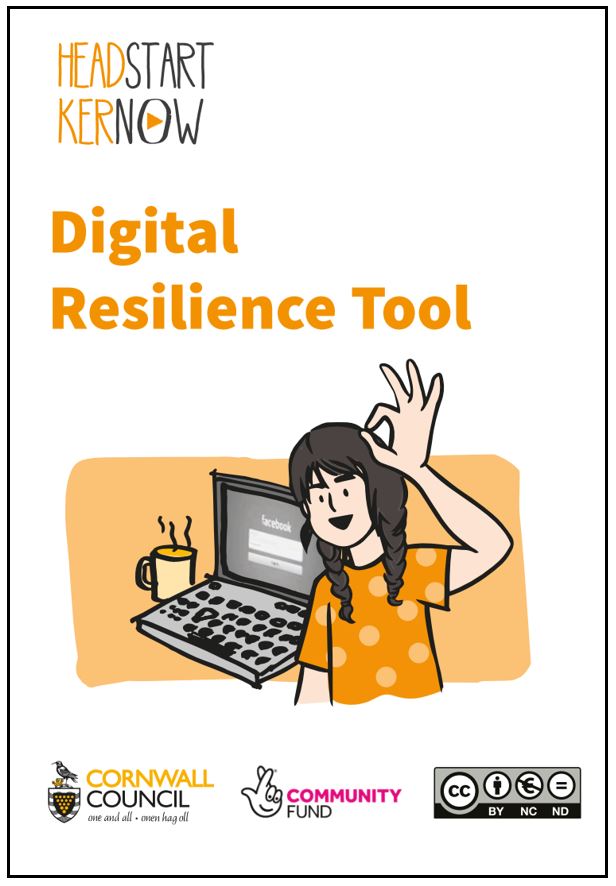
Today's spotlight is on the Digital Resilience Tool. This tool helps professionals assess a range of behaviours young people engage in online. Behaviours are rated as ‘Harmful’ (needing intervention), ‘Potentially Harmful’ (needing more information) and ‘Not Harmful’ (healthy or normal for their age). The tool is interactive, so you can find resources in each behaviour to help you respond appropriately, including suggested lesson plans from Project Evolve.
Have you joined the Headstart Kernow Creative Education membership yet?
Sign up here: www.headstartkernow.org.uk/creative-education/
Download our updated Creative Education membership information fliers with access links for:

Stay in touch: Check out our training and other support and sign up for the occasional newsletter.
And follow us on our page on the Services for Schools platform.